

- There Is No Source of Truth. That’s the Problem.
- The Efficiency Numbers Are Hard to Ignore
- How HUVR Actually Closes the Gap
- On AI: Your Data Has to Be Ready First
- Where This Is All Heading
- The Advice for Operators Starting From Scratch
- Want to see how HUVR handles your specific asset environment? Our demos are tailored to your operations, your equipment types, and where your data lives today.
- Want to See Our Software in Action?
The Inspection Data Problem Is a Business Risk. Here’s What Operators Are Doing About It – with HUVR.
Recap from our May 27 roundtable: Modernizing Energy and Industrial Asset Management
We brought together two of the sharpest minds in inspection and asset data management for a candid roundtable on what’s actually going wrong inside midstream and industrial operations, and what it costs to ignore it.
Scott White and William Wigfield joined Technical Toolboxes’ Nick Rendall for a 45-minute conversation that covered everything from spreadsheet sprawl to AI readiness to where field inspection technology is headed. If you missed it, here are the moments that mattered.
- There Is No Source of Truth. That’s the Problem.
- The Efficiency Numbers Are Hard to Ignore
- How HUVR Actually Closes the Gap
- On AI: Your Data Has to Be Ready First
- Where This Is All Heading
- The Advice for Operators Starting From Scratch
- Want to see how HUVR handles your specific asset environment? Our demos are tailored to your operations, your equipment types, and where your data lives today.
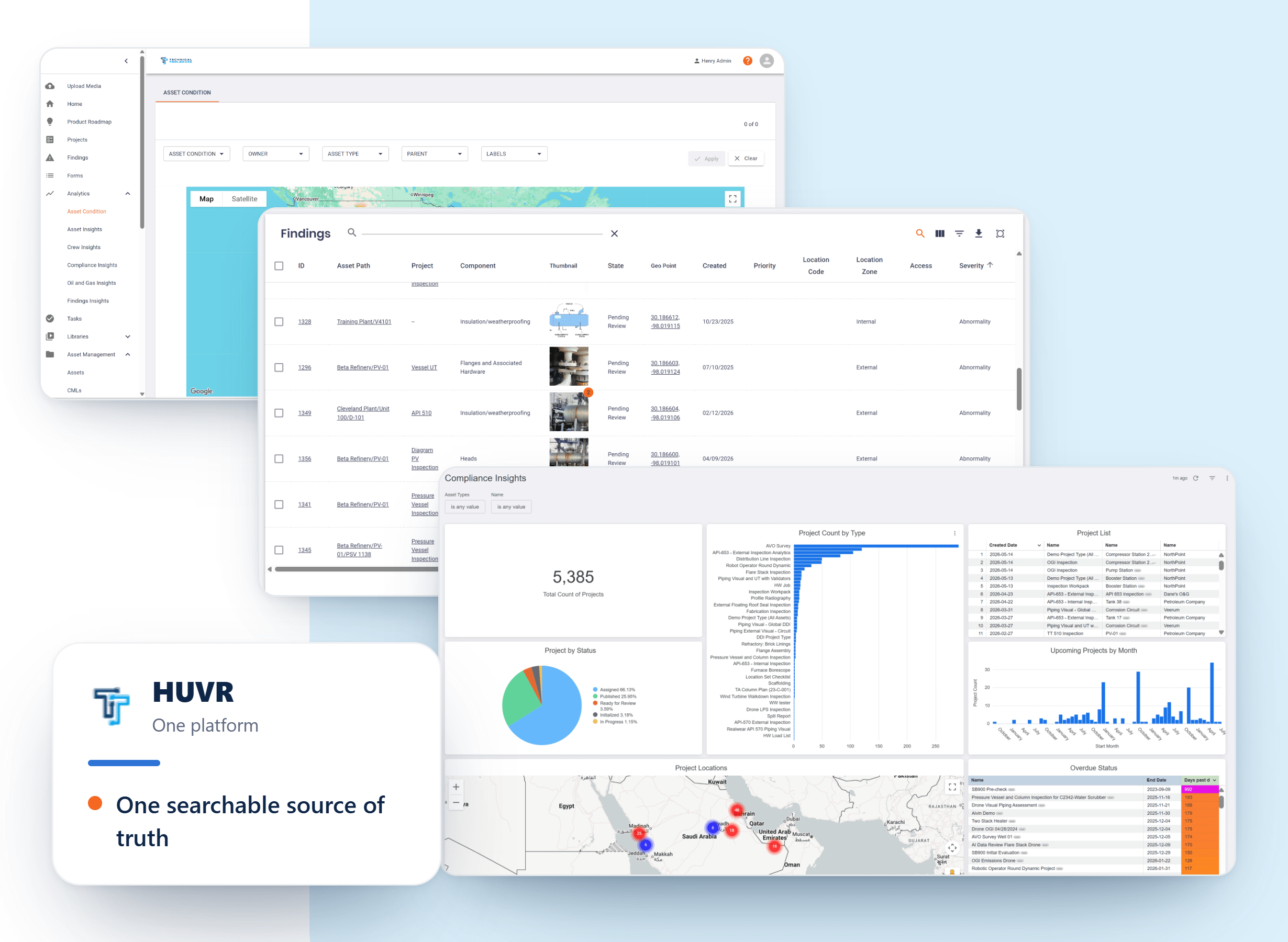
There Is No Source of Truth. That’s the Problem.
The roundtable opened with a simple but uncomfortable question: where does your inspection data actually live?
For most operations, the answer is everywhere and nowhere. Some data in an IDMS. Some in a shared drive. Some in a subcontractor’s PDF buried in someone’s inbox. Some in a spreadsheet a field tech hasn’t touched in two years.
As Scott put it during the session: “You may have some data in one system, some data on another system, some mix of that in spreadsheets, but there’s no one place that someone can go to and say, this is all the equipment we have, this is the current status of their inspections.”
That fragmentation is not just inconvenient. It creates real operational risk. Inspections get pushed. Findings go untracked. Audit prep turns into a two-week scramble. Field teams go out blind, with no history on the equipment they’re about to assess.
The Efficiency Numbers Are Hard to Ignore 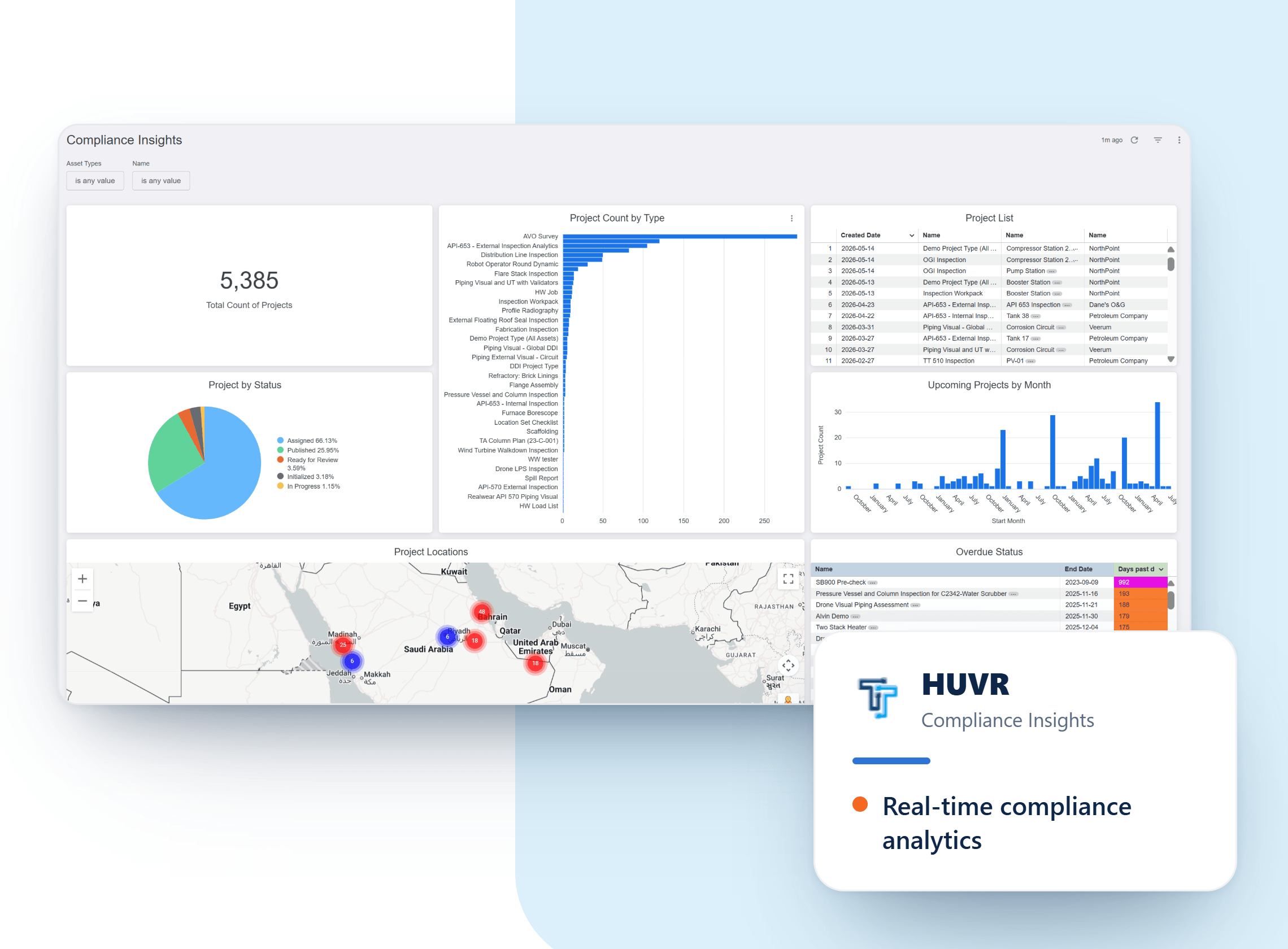
The panel shared several customer examples that illustrate how much time is being lost to the status quo:
- One upstream customer cut inspection prep time from 8 hours to 30 minutes, just by having data in one place instead of scattered across systems.
- One operation reduced its inspection team from five people to one while maintaining the same inspection volume, because eliminating secondary data entry and manual report writing freed up that much capacity.
- A super major reported approximately $3 million in total savings after deploying HUVR, split between cleaner RBI data inputs and reduced contractor billing from faster reporting cycles.
- One customer’s audit prep dropped from two weeks to 30 minutes. And the fear that came with those two weeks went with it.
These aren’t edge cases. Across industries and company sizes, the pattern is consistent: when inspectors stop re-entering data and chasing records, they get back to actual inspection work. Three to eight times faster, in many of the cases the HUVR team has documented.
How HUVR Actually Closes the Gap
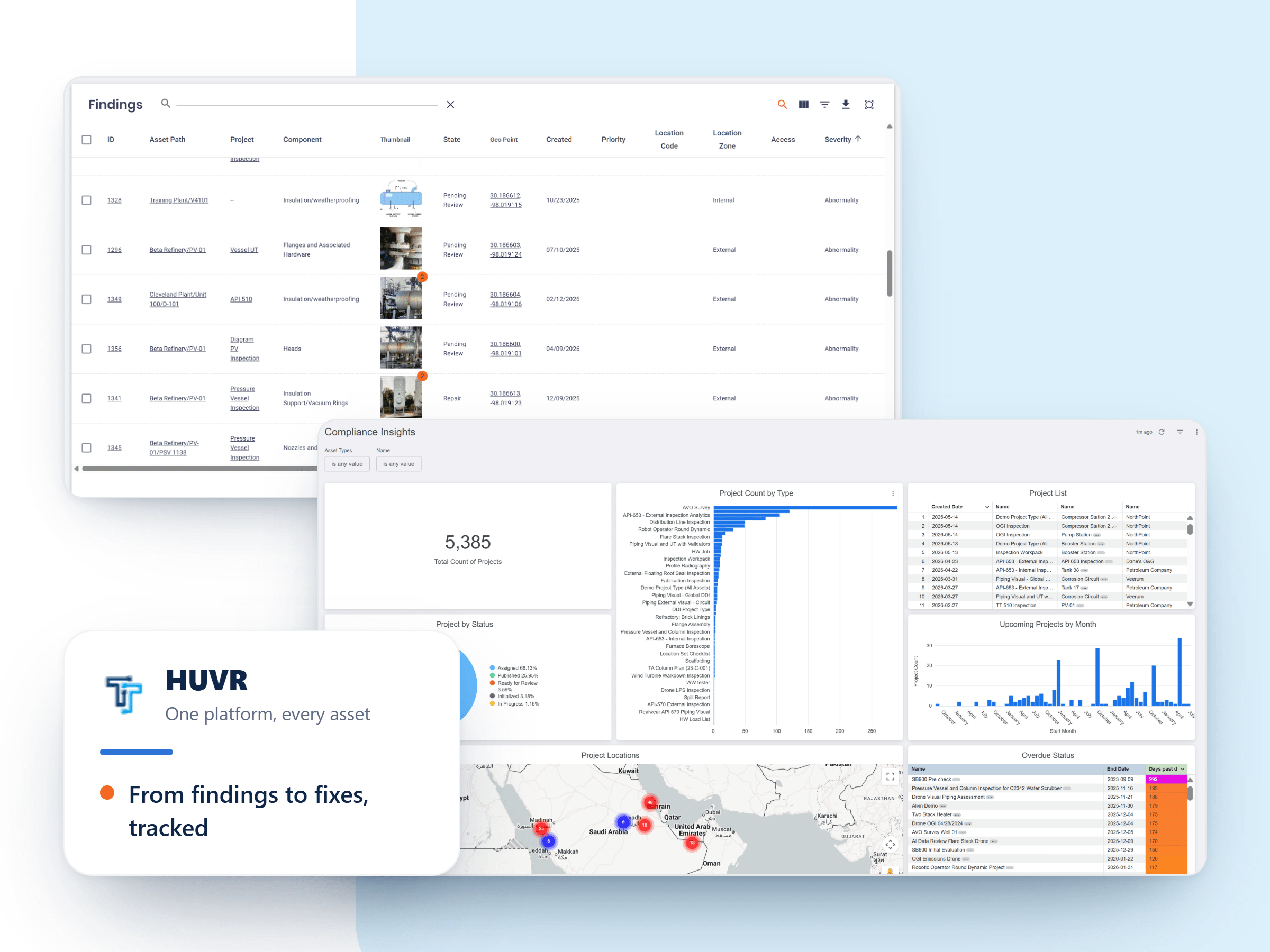
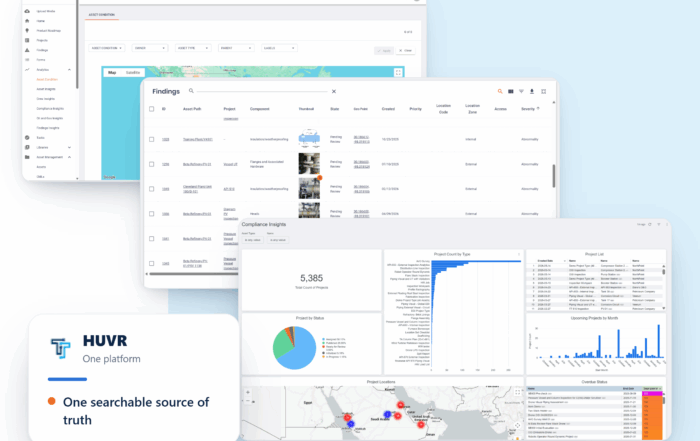
HUVR is built around the asset, not the inspection form. Every piece of equipment has a full history: every inspection, every finding, every media file, every measurement, going back years. That history travels with the asset, not with the person who used to manage it.
From the field, inspectors work from standardized checklists on a mobile app (offline-capable, compatible with iOS and Android). They collect data, capture photos, video, and LIDAR scans, then sync back to the system when they’re connected. Reports generate automatically from what was collected. No retyping. No PDF delivery. No waiting.
William described what that shift looks like from the asset owner side: the bottleneck no longer sits with inspectors waiting to deliver reports. It has flipped entirely. SMEs now can’t review incoming data as fast as inspectors are submitting it.
That is a good problem to have.
For compliance teams, every inspection is timestamped, permission-controlled, and locked to read-only once finalized. Scheduled inspections tied to regulatory requirements are tracked automatically. When an auditor shows up, the data is already organized.
On AI: Your Data Has to Be Ready First
The panel addressed AI directly, and the answer was grounded in something most organizations skip: before any AI tool can add value, your data has to be clean, structured, and accessible.
HUVR’s deliberate approach has been to focus on becoming the data layer, the structured repository that connects to customers’ AI tools and third-party vendors of choice, rather than building a competing model. Several enterprise customers already use HUVR as the underlying data source for their own AI initiatives. That foundation has to come before anything else.
Where This Is All Heading
Looking ahead three to five years, the panel pointed to several trends already reshaping the inspection landscape: drones moving from experimental to standard practice, robotics entering confined spaces that used to require cutting holes in tanks, and LIDAR dropping from “super expensive” to “mildly expensive” and still falling.
More tools will be in inspectors’ hands in the field, which means the need for a platform that can capture, store, and act on that data will only grow.
For Technical Toolboxes specifically, the HUVR acquisition sets up a meaningful integration opportunity: bringing TT’s engineering integrity calculations directly into HUVR’s field app, so inspectors can run calculations offline against live asset data without going back to the office. That work is underway.
The Advice for Operators Starting From Scratch
If your organization is still running on spreadsheets or disconnected tools, Scott and William gave the same advice independently: don’t try to solve everything at once. Pick one workflow. Find the biggest pain point or the most time-critical process. Solve that one well, document the win, and build from there.
The organizations that have gotten the most out of HUVR started small and had an internal champion who could make the case in terms of business impact, not technology features.
Want to see how HUVR handles your specific asset environment? Our demos are tailored to your operations, your equipment types, and where your data lives today.


Suggested Post
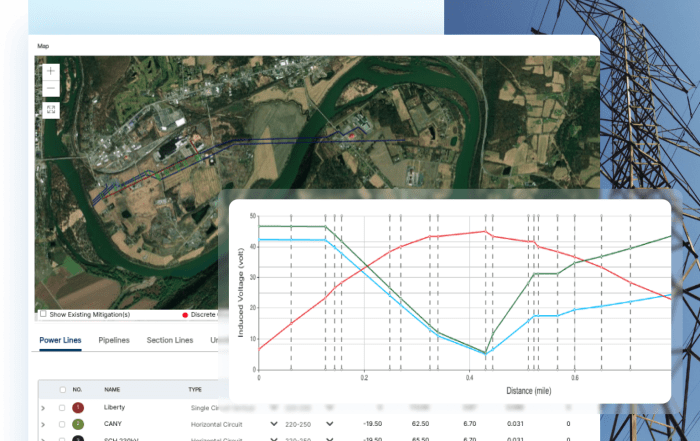
AC Interference on Pipelines: What It Is, Why It’s Getting Worse, and How to Fix It
By: Joe Pikas You’re reviewing CP/AC survey data on a pipeline segment that runs [...]
The Inspection Data Problem Is a Business Risk. Here’s What Operators Are Doing About It- with HUVR
The Inspection Data Problem Is a Business Risk. Here's What Operators Are Doing About [...]

Modern Gas System Modeling: Why Magnolia River Trusts GASWorkS to Keep the Pressure Up (Literally)
Modern Gas System Modeling: Why Magnolia River Trusts GASWorkS to Keep the Pressure Up [...]