


Wade Wang, P.E.
Sixteen years across the field, the design office, and the analysis side – and a Technical Toolboxes user since 2013. Wade joins the board focused on network modeling, and he arrives with specific ideas about what engineering software should do better.
We’re pleased to welcome Wade Wang, P.E., to the Technical Toolboxes Pipeline Expert Board.
The board exists to keep us honest. Its members are practicing engineers who give us regular, direct feedback on what we build, what we’re missing, and how our software holds up in the middle of a real project. Wade joins with a focus on network modeling – and with a decade of history as one of our users.
He started in the field, and it shows
Wade came out of the University of Alberta into a province where, as he puts it, “if you graduate as a mechanical engineer in Alberta, pipelines have a way of finding you.” His first job was as a field service engineer: nitrogen purging, hydrotesting, line fill. Two years of it. He counts those among the most useful years of his career.
“I learned very early that eventually somebody has to go out there – often in difficult conditions – and build, test, or operate what you put on a drawing. That stays with you.”
From there he moved into design at a consulting firm, where one of his first major projects was Energy East. That’s where he learned crossing design, HDD, and the mechanical design of facilities – valve sites, pig traps, pump stations. After relocating to California in 2016 he went deep on hydraulic modeling and stress analysis. Then he went further afield: mining, water, and solid waste, where the fluids, the pipe materials, the design codes, and the economics are all different.
Most engineers specialize and stay put. Wade’s range is the unusual part, and he’s clear about what it gave him – a habit of asking why a requirement exists rather than stopping at what the code says.
“Once you move into another industry, you start seeing that some of those ‘rules’ are really responses to a very specific set of conditions.”
That matters most in the situations where past experience doesn’t quite fit and there isn’t a clause that gives a clean answer.
A user before he was an advisor
Wade first used our software around 2013 – the HDD tools and the API 1102 highway crossing calculations. Back then it was an executable you downloaded onto your machine. He’s watched it become the HUB, with cloud-based tools and coverage that now runs from tank inspection to pipeline integrity to gas modeling.
He’ll tell you the tools changed. He’ll also tell you that he changed.
“In 2013, I mostly wanted the software to give me the right number efficiently. Today I expect much more. I want an interface intuitive enough that I’m thinking about the engineering rather than thinking about how to operate the software.”
That’s the perspective this board is built to capture – someone who has been on the receiving end of our release notes for over a decade and has opinions about them.
What he wants to push on
Wade is specific about where network modeling should go, and his description of the current state will sound familiar to anyone doing this work. A lot of network modeling still means installing desktop software locally, managing licenses, exchanging model files, and hoping the version on your machine matches the version being used by whoever reviews your work.
“I’d love to see a truly browser-based hydraulic modeling tool – lightweight enough that someone can pick it up quickly, but powerful enough to handle real network modeling rather than just single-line calculations.”
The interface, in his view, is at least half the value. Change a demand, add a branch, resize a pipe, adjust a compressor condition, and you should see the impact immediately rather than feeling like you’re rebuilding the model. The output should be something you can put in front of a client without spending another hour recreating the same information in PowerPoint, CAD, or Excel. As he points out, engineers spend a surprising amount of time making their engineering software output understandable to everybody else.
His second priority is engineering guidance inside the software: surfacing the assumptions behind a result, the limits of the method being used, and anything about the inputs that deserves a second look.
The problem he’s watching
Ask Wade what the industry isn’t ready for and he doesn’t name a technology. He names an arithmetic problem.
Gas infrastructure is active again. Data center and power-generation demand is creating real capacity questions – looping, compression, new laterals, upgrades to existing systems. At the same time, the engineers and operators who spent thirty or forty years developing judgment about these systems are approaching retirement.
“The demand for judgment is increasing at exactly the time a lot of that judgment is walking out the door.”
He sees AI as part of that story, though not the part people usually worry about. His concern isn’t that AI replaces engineering work. It’s that people get comfortable with very convincing answers that nobody in the room is experienced enough to challenge. Which brings him back to what software should be doing: show the assumptions behind a calculation, flag when a method is being pushed outside its intended range, and make it easy to understand not only what was calculated, but why.
“Software cannot replace an experienced engineer’s judgment, and I don’t think we should pretend that it can. But it can do a much better job of helping the next generation develop and apply that judgment.”
Welcome aboard, Wade.
ABOUT WADE WANG
Wade Wang is a senior pipeline engineer with more than 16 years of experience in pipeline design, construction, and commissioning. As a project lead and licensed professional engineer, he has led multidisciplinary teams on long-distance oil, gas, water, and slurry pipeline and facility projects across Canada and the United States, supporting projects for nearly all of the major pipeline operators in North America.
His technical experience covers gas and liquid pipeline hydraulic modeling, stress analysis, HDD design, and pipeline crossing design, with in-depth knowledge of U.S. pipeline regulations including 49 CFR Parts 192 and 195, ASME B31.4, ASME B31.8, and other applicable ASME and API standards. A Technical Toolboxes user since 2013, Wade brings to the Pipeline Expert Board the perspective of both a long-time user and a practicing engineer, with particular interest in engineering software usability, design automation, and tools that make visible the assumptions and engineering judgment behind an answer.


Suggested Post
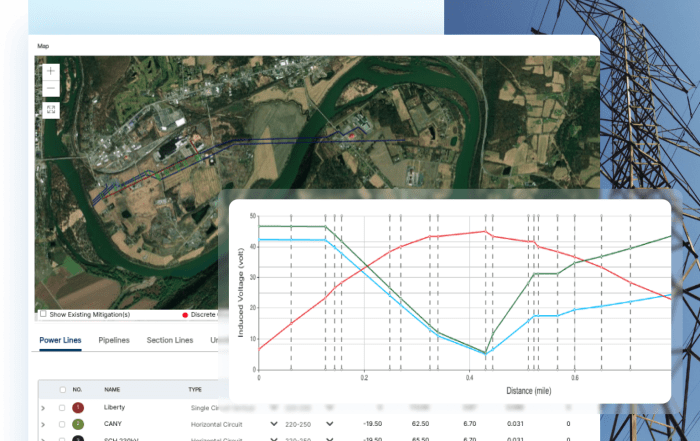
AC Interference on Pipelines: What It Is, Why It’s Getting Worse, and How to Fix It
By: Joe Pikas You’re reviewing CP/AC survey data on a pipeline segment that runs [...]
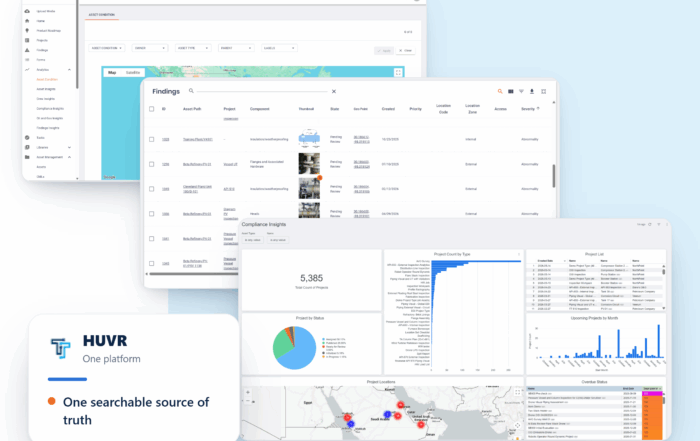
The Inspection Data Problem Is a Business Risk. Here’s What Operators Are Doing About It- with HUVR
The Inspection Data Problem Is a Business Risk. Here's What Operators Are Doing About [...]
Modern Gas System Modeling: Why Magnolia River Trusts GASWorkS to Keep the Pressure Up (Literally)
Modern Gas System Modeling: Why Magnolia River Trusts GASWorkS to Keep the Pressure Up [...]